Forestry contractors and crew supervisors often work far from their main yard or office. Tools and equipment may be staged at logging sites for days or even weeks.
It is easy to assume that a standard commercial property policy will cover those items wherever they are used. That assumption often leads to underinsurance and coverage gaps.
Commercial property policies are typically tied to a specific, scheduled location. When tools leave that location, coverage may no longer apply. This creates exposure to theft, vandalism, and weather damage at remote job sites.
Inland marine insurance offers a practical solution by extending protection to equipment wherever the job takes it. This guide explains how inland marine coverage works, why it matters for forestry operations, and how it fits into a broader logging insurance strategy.
Why Remote Job Locations Lead to Coverage Gaps
Forestry work typically takes place in unpredictable settings in nature. Crews operate in wooded areas, on rural tracts, and at temporary sites that are difficult to secure. Equipment is often left overnight or between shifts, increasing the risk of loss.
Most commercial property insurance policies aim to safeguard assets situated at a specific location. These policies generally focus on property kept at the insured premises rather than items that frequently move between sites. When tools are moved offsite, coverage may become limited or unavailable.
For forestry businesses, that limitation can lead to underinsurance. High-value tools stored at a logging site may not be covered, and losses during transport may fall outside policy terms. Even a single uncovered loss can disrupt productivity and strain budgets.
What Inland Marine Insurance Covers
Inland marine insurance is designed for property that moves from place to place or is used across multiple locations. It developed to address gaps left by traditional property policies and is widely used across industries that rely on mobile equipment.
Inland marine insurance covers equipment, materials, and goods while they are transported over land or temporarily stored away from a primary location. This includes tools in transit, items stored at job sites, and equipment held at temporary locations.
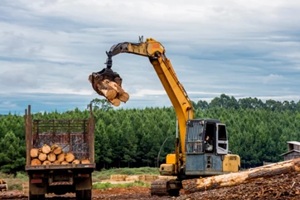
For forestry contractors, this means chainsaws, skidders, loaders, and similar equipment can remain protected even when left at remote sites. Coverage can extend to transportation between jobs and to equipment stored in trailers or open staging areas. Because the policy follows the equipment rather than a fixed address, it helps reduce underinsurance within a logging insurance program.
Common Risks Facing Forestry Equipment
Forestry equipment has a different risk profile than tools used in more controlled settings. Remote job sites often lack consistent supervision, and environmental conditions can shift quickly.
Forestry operations often occur in rugged, undeveloped areas with limited infrastructure. These conditions increase exposure to natural hazards. Heavy rain, flooding, and strong winds can damage tools stored outdoors. Falling branches and unstable terrain add risk.
Equipment left on-site may also be vulnerable to theft or vandalism, especially in hard-to-monitor areas. Without the right insurance structure for logging, these exposures can lead to costly delays.
How Inland Marine Fits into Logging Insurance
Inland marine insurance works alongside other policies to create a more complete logging insurance program. Each type of coverage pertains to a distinct category of risk.
Commercial property insurance protects buildings and equipment at specific sites, whereas general liability insurance covers claims from third parties for injuries or property damage. Inland marine insurance fills the gap by protecting tools and equipment wherever they are used or stored.
This distinction matters because many forestry businesses assume their existing policies cover everything. Omitting inland marine coverage often results in underinsurance that only becomes apparent after a loss.
Signs Your Forestry Operation May Be Underinsured
Many contractors only identify coverage gaps after filing a claim. A closer look at daily operations can reveal whether protection matches actual risk.
If equipment is regularly transported between job sites or left in the field overnight, standard property coverage may not be enough. Policies that list only one business location are another indicator that off-site tools may not be fully protected. Inland marine insurance can strengthen logging insurance and reduce uncovered losses.
Practical Measures for Enhancing Protection
Enhancing coverage begins with a thorough understanding of the risks involved. Taking inventory of tools and equipment, along with their approximate value and typical location, provides a solid starting point.
After that, consulting with a knowledgeable insurance expert can help pinpoint any gaps in your policies. Inland marine coverage can then be added or adjusted to match how equipment is used. Because forestry operations evolve, periodic reviews help keep logging insurance aligned with changing needs and reduce underinsurance.
Burton & Company Can Help Protect Your Equipment in the Field

Forestry work has enough challenges without worrying about whether your tools are covered at every job site. Inland marine insurance plays an important role in reducing underinsurance and keeping operations running smoothly when the unexpected happens.
Burton & Company has been serving Virginia businesses for generations, helping contractors build logging insurance programs that reflect how they actually operate. Their team takes the time to understand where equipment is used, how it is transported, and what risks are most likely to affect your business.
If your crews regularly operate at remote sites, now is a good time to review your coverage. Get in touch with Burton & Company online or call (888) 652-1046 to discuss inland marine insurance options and enhance your logging coverage, guaranteeing your equipment is safeguarded no matter where the work leads you.