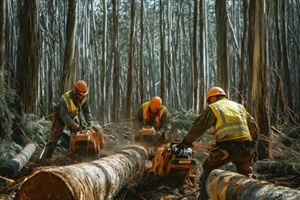
Logging is among the nation’s most hazardous jobs, with a fatal injury rate far exceeding the national average. Such risk demands insurance that actually protects operators. Yet, many are left underinsured when it matters most.
Underinsurance typically results from outdated policies that no longer reflect the real costs of timber operations. This article examines the reasons for and effects of underinsurance and explores potential insurance protection solutions for logging operators.
What “Underinsured” Actually Means for a Logging Business
Underinsurance occurs when a policy’s limits fall short of a business’s actual financial exposure. And it can be more problematic than being uninsured, because it creates a false sense of security. United Policyholders, a nonprofit insurance advocacy organization, describes it as the gap between what a policy pays and the actual cost of recovering from a loss.
For logging operations, that gap can show up in several places:
- Equipment values that no longer match replacement costs. The value of logging equipment tends to drift over time. A feller-buncher bought five years ago might be significantly more expensive to replace now. New machines routinely cost $200,000 to $500,000 or more, and many operations run multiple units simultaneously.
- Liability limits that haven’t kept pace. Operations near roads, residential areas, or power lines carry real third-party exposure. Outdated logging liability insurance limits may not come close to covering damages in a serious incident.
- Workers’ compensation gaps. Each state sets its own workers’ comp requirements, and logging rates vary widely depending on the methods used. Operators who expand crews or shift to manual harvesting without updating their coverage can end up under-protected.
- Timber loss that isn’t covered. Not all commercial logging policies include coverage for standing timber, timber in transit, or timber lost to fire, storm damage, or theft. Without deliberate attention to these gaps, a single weather event or wildfire can result in losses that dwarf the value of the equipment itself.
Why Timber Industry Insurance Gaps Are So Common
The logging industry does not sit still. Timber harvesting insurance requirements shift with changes in state regulations, Occupational Safety and Health Administration (OSHA) standards, and timber buyers’ contract demands. OSHA’s logging standard, 29 CFR 1910.266, applies to all logging operations regardless of end use, and noncompliance consequences fall directly on operators.
Furthermore, the financial environment has changed. Equipment prices, medical costs, and lawsuit settlements have risen. A policy set five years ago may now have a limit far below what’s needed.
The scale of commercial underinsurance across industries is vast. The Insurance Information Institute cites research findings noting that the majority of commercial properties studied were underinsured, with most undervalued by 25% or more. For logging operations, where equipment, timber, and liability exposures compound quickly, the gap can be even wider.
Annual renewals often proceed without reviewing whether the values align with current operations. Logging insurance needs can outgrow coverage without anyone noticing.
The Real Cost of Getting It Wrong
If a claim reveals underinsurance, the business pays the price. Carrying $300,000 in coverage for over $1 million in equipment leaves a huge shortfall after a loss. The policy pays its limit, and the business absorbs the rest.
A $1 million liability limit is not enough if a claim results in a $2 million judgment. For a small operation, one underinsured loss can be fatal. This is avoidable.
Steps to Close the Coverage Gap
Closing timber industry insurance gaps starts with an honest assessment of current coverage.
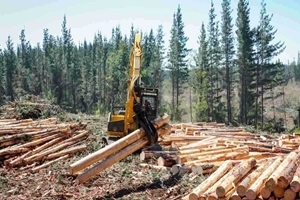
- Get a current equipment appraisal. The insurance value of logging equipment should reflect today’s replacement cost, not what was paid years ago.
- Review limits against realistic scenarios. If the worst happened tomorrow, would this policy make the business whole? For logging liability insurance and workers’ comp, “adequate” is not the same as “minimum required.”
- Account for operational changes. New equipment, expanded crews, or a shift in harvesting methods all change the risk profile and warrant a policy review.
- Examine timber coverage specifically. Many operators find that their standard commercial policy excludes or severely limits timber loss coverage, often only after a loss has occurred.
- Work with an agent who understands logging. Forestry business insurance needs differ from those of general commercial insurance. An experienced agent can identify gaps that a routine renewal would never flag.
Talk to Burton & Company About Your Logging Insurance Coverage
Burton & Company has helped Virginia businesses protect what matters most since 1891. If you run a logging business and haven’t reviewed your coverage lately, your insurance may be behind your operation.
Logging insurance underinsurance is not a theoretical problem. It’s a financial risk that shows up the moment a major claim is filed.
Reach out to Burton & Company online or call (888) 652-1046 to schedule a commercial logging policy review. It’s a straightforward conversation about whether your current coverage is doing the job it needs to do.