Most logging contractors in Virginia cut timber on land owned by someone else. As a result, insurers often add a loggers broad form liability endorsement to the contractor’s general liability policy.
It loosens several of the standard exclusions that would otherwise leave the logger uncovered for damage to the property they’re working on.
Two Standard Exclusions and the Logging Liability Gap
Most forestry operator liability policies are built on the standard occurrence form from the Insurance Services Office, and two of its exclusions come up often on a harvest.
A general liability policy generally won’t cover personal property in the insured’s care, custody, or control. A carrier can also refuse to pay for damage to the particular piece of land or building where the policyholder is working.
On a typical tract, a logging crew drives the landowner’s haul road, crosses the culverts, works around the residual stand, and fells timber that belongs to someone else. When denying a large share of the property damage from skidding and felling, a carrier can point to those exclusions.
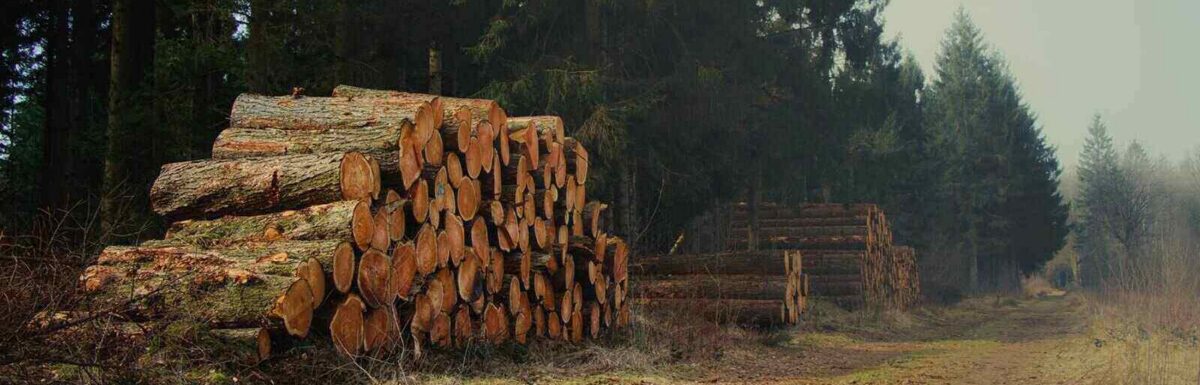
Which exclusion an adjuster points to can depend on what stage the tree is at. A standing tree is part of the landowner’s land, but once it’s felled and decked on the landing, it becomes property in the logger’s care, so a different exclusion applies.
Once it’s cut down and stacked on your landing, it counts as property in your hands, so the adjuster may use the exclusion for property in your care instead. With a standard policy, that can leave a logger with two different coverage gaps on the same job.
What Carriers Usually Change in the Broad Form Endorsement
Carriers draft their own versions of loggers broad form liability coverage, though many include terms for fire, timber trespass, and property in your care.
Fire. A crew working near dry slash can set a fire with skidder exhaust or a dull chain grinding on a stump. If the fire escapes through the crew’s negligence, Virginia law directs the State Forester to collect the cost of suppression work done under a forest warden’s direction.
Virginia operators also have a statutory duty to fit logging machines used around woods or dry grass with spark-control equipment. An operator who skips it can face a Class 4 misdemeanor charge for every violation.
Some carriers write suppression expense coverage into the endorsement, usually under a separate sublimit, plus protection for a neighbor’s burned timber. Underwriters reviewing fire liability for logging operations often want to know whether spark arresters are maintained and whether each machine has an extinguisher on board.
Timber trespass. A crew that misreads a flag line or trusts a GPS boundary that is a few chains off can end up felling the neighbor’s trees. In that case, the cutter can owe triple the stumpage value, plus replanting costs of up to $450 an acre and the owner’s estimator, legal, and attorney fees, unless it proves it acted prudently under a good-faith claim of right.
Coverage for an accidental cut depends on each carrier’s wording. A logger shopping for this endorsement should ask the underwriter in writing whether the company would pay the tripled amount or only the base stumpage value.
Property in your care. Some carriers narrow the exclusions in this endorsement, so harm to a landowner’s gates, fences, roads, and trees may be covered. That protection is frequently written with a limit of its own, listed on the declarations page under broad form property damage for logging operations.
Claims Practice After a Fire or a Wrong-Side Cut
After a fire, a logger can receive separate demands from more than one party. The Virginia Department of Forestry may invoice suppression costs, while the neighbor whose stand burned looks for payment on lost timber.
Wardens and adjusters investigating the cause often ask for maintenance records. Crews that logged their spark arrester checks and kept an extinguisher on each machine have paperwork to back up their version of events.
Once a landowner learns of a wrong-side cut and who made it, the landowner has 90 days to serve notice and name an estimator. If the cutter does not dispute the trespass, they get a 30-day window from receipt to bring in a second timber cruiser. The two work out the damage figure together, and if they can’t agree, they pick a neutral third estimator whose decision is final.
Broad Form Alongside Equipment, Auto, and Umbrella Coverage
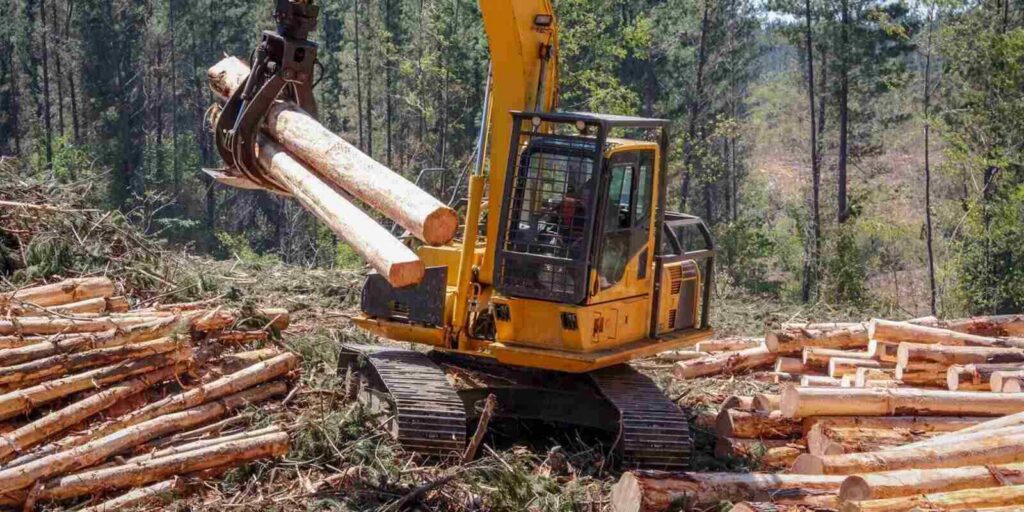
Loggers broad form covers harm a crew causes to other people’s property. A logger’s own skidder, feller buncher, and loader are generally excluded from the endorsement.
Owners usually protect their equipment with an inland marine floater placed under a separate property insurance program.
Log trucks go on commercial auto, and crew injuries fall under workers’ compensation. Full forestry coverage programs typically include those lines along with the broad form endorsement. Read the policies side by side to spot any gap between logging liability insurance and the equipment or auto policy.
Landowners can also shift risk to the logger in the timber sale contract. The Virginia Department of Forestry recommends that contracts require the buyer to follow state fire laws and take responsibility for any fire caused by the buyer’s or its agents’ accident or negligence. A sample contract from a Virginia Tech landowner workshop goes further, putting all risk of fire loss on the purchaser and requiring the purchaser to indemnify the seller.
The department’s state forest contracts also require the purchaser to repair fences damaged by its operations and to cause the least possible damage to main haul roads.
Extension foresters at North Carolina State University give similar guidance to private landowners. They urge owners to make every party on a logging job carry enough liability insurance and to put fire responsibility in the contract. Before signing that kind of agreement, compare its requirements against the endorsement’s sublimits.
A commercial umbrella policy can add limits on top of general liability, though some excess carriers decline to extend that layer over a broad form endorsement or its fire suppression sublimit. Get that confirmation in writing before buying.
Talk to Burton & Company About Your Logging Liability Insurance
Burton & Company has served Virginia businesses since 1891. Escaped fires and wrong-side cuts come up often when forestry clients sit down with our team. We can read your endorsement, sublimits, and timber contracts alongside you and point out only the changes your operation needs. Reach us at (888) 652-1046, or request a quote online whenever it suits your schedule.