
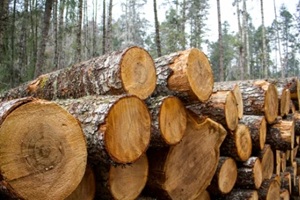
Two different logging companies in Virginia with similar payrolls can open their renewal notices and find two very different workers’ compensation totals.
The reason for that can come down to one line on the declarations page, the experience modification rate (EMR). Because the number is built from each company’s own claims record, it is a part of forestry insurance premiums an owner has control over by keeping an eye on safety habits and careful claims handling.
What an Experience Modification Is
For Virginia employers, the EMR (sometimes called an e-mod) comes from the National Council on Compensation Insurance. Its plan lines up what your workers’ compensation claims actually cost against what a business in your class code, at your payroll size, would be projected to lose.
Match that benchmark exactly, and your number is 1.0. A 0.85 means that portion of the bill is trimmed by 15%, while a 1.25 pushes it up by 25%.
There is a direct link between your EMR and insurance premiums, but it reaches only the workers’ comp side of a forestry insurance program. General liability and equipment policies are priced on their own.
Logging carried the worst fatal injury rate of any civilian job the U.S. Bureau of Labor Statistics tracked in 2024, at 110.4 deaths for every 100,000 full-time workers. Carriers fold that danger into what they charge timber-harvesting classifications.
The EMR then multiplies an already steep starting figure, so each point above 1.0 costs a crew more real money than the same point would cost an office or retail business.
An operation doesn’t get an EMR at all until its workers’ comp spending hits the eligibility amount set for Virginia, measured over the latest 24 months or averaged across the full experience period. Smaller crews under that threshold pay standard class pricing, and they don’t get their first rating until they renew.
Claims History Affects Your Experience Modification Rate
Three pieces of the National Council on Compensation Insurance formula decide how far one claim pushes your EMR. How often injuries happen can outweigh how large any single one turns out to be.
How the Split Point Weights Each Claim
The National Council on Compensation Insurance divides each claim’s cost at a set dollar mark called the split point. Money below that line goes into the formula in full, while anything above it does not.
The National Council on Compensation Insurance moved to a state-specific threshold with the 2024 rating cycle, so Virginia now has its own figure instead of a single national one.
That is why five $12,000 chainsaw cuts can move an EMR further than one $60,000 skidder rollover, depending on where Virginia’s split point currently sits.
Almost all the money from those smaller injuries falls below the line and gets counted dollar for dollar. On a worksheet, those amounts show up under actual primary losses, which is the column to check first when a year passes without a serious accident and the EMR still climbs.
Medical-Only Claims Carry Less Weight
A medical-only claim is one where the worker never loses paid time, and the formula goes easy on these.
Under the experience rating adjustment, which most states have adopted, typically just 30% of that cost enters the math. The aim is to have employers report every injury instead of handling small ones out of their own pocket. Covering a minor cut yourself can also give the carrier room to dispute coverage if that cut later keeps a sawyer home and turns into a lost-time case.
How Long a Claim Stays in Your EMR
The National Council on Compensation Insurance reads back through three completed rating periods of payroll and loss history, leaving out the one that just ended. On a calendar year policy, an EMR effective Jan. 1, 2027, typically draws on policies that began in 2023, 2024, and 2025.
Following that same schedule, an injury in fall 2026 would first appear at the 2028 renewal. It would stay in the formula through 2030.
Open claims get counted at their reserve, the carrier’s estimate of what each one will cost by the time it closes. Losses generally go to the National Council on Compensation Insurance about 18 months after a policy starts, so an inflated reserve on a case that has since settled cheaper can hold your EMR up.
Forestry Operations Can Lower Their Experience Modification Rate
Companies can reduce their insurance premiums in forestry through fewer claims, faster recovery, and cleaner data. Each one shows up in a different part of the worksheet.
Logging is a risky job, especially felling and time spent near running skidders and loaders. The Occupational Safety and Health Administration rule for logging operationsrequires workers to be at least two tree lengths from one another while a tree is coming down, and it calls for first aid and CPR training for every employee.
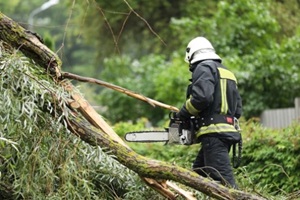
Crews that log tailgate safety talks and saw upkeep build a forestry safety record that insurance underwriters like to see.
Under Virginia Code § 65.2-306, an employer or carrier can contest a claim when a worker willfully broke a reasonable workplace rule, though whoever raises that defense has to prove it. Signed attendance sheets from those talks are solid evidence.
The cost of one injury can be reduced with faster recovery times. Virginia pays no wage benefits for the first seven days a worker is out unless the absence runs past 21 days.
Bringing someone back to modified duty inside that first week can keep the file medical-only, where it enters the EMR at the 30% value. Light work for a forestry crew might mean greasing equipment or keeping load tickets, as long as a doctor signs off.
Cleaner data catches reporting mistakes that throw off either the EMR or the premium. Every payroll figure and loss behind your number is listed on the experience rating worksheet, and checking each line against the carrier’s loss runs a few months ahead of renewal gives the carrier room to submit corrections.
Look for closed claims still holding reserves and payroll filed under the wrong class code. If an open file looks overvalued, ask the carrier to recheck its estimate before it reports the policy.
Lowering forestry insurance costs through the EMR takes time, since each year of losses stays in the math for three renewals and a safety change typically reaches pricing about two cycles after it starts.
Talk to Burton & Company About Your Experience Mod Rate
Burton & Company has worked with Virginia businesses since 1891. Our team serves logging and timber operations across the Commonwealth and will sit down with your experience rating worksheet to mark anything worth challenging before your next renewal.
As an independent agency, we can shop your workers’ compensation with several carriers while looking at the rest of your business insurance program. Expect a plain read on your numbers and no push toward coverage your crew won’t use. Call (888) 652-1046 or request a forestry insurance quote.