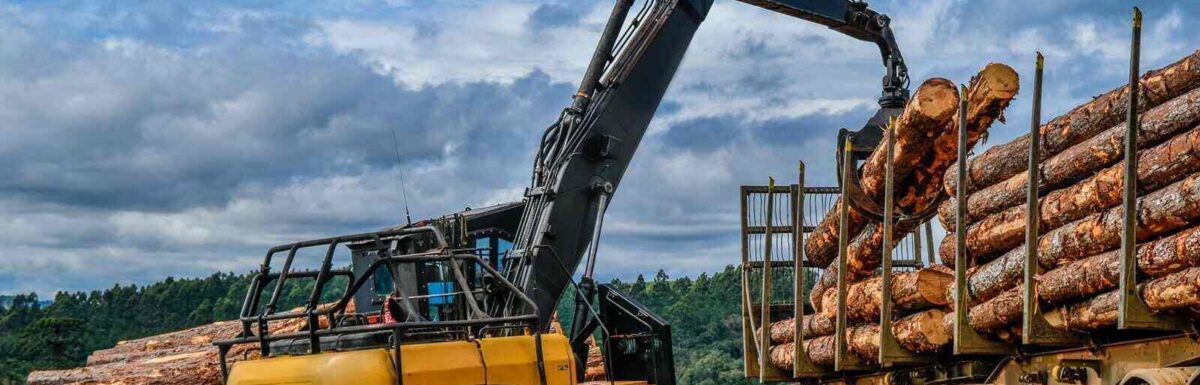
A single skidder or feller buncher can represent a six-figure investment, and a fleet working several tracts at once multiplies their exposure fast. Forestry equipment insurance can cover much of what goes wrong with those machines, from theft to fire.
What a policy actually pays for, and where it stops, is where owners can get caught off guard. The details of a policy really depend on how a covered loss is defined, and that language shifts from one carrier to the next.
What Does Forestry Equipment Insurance Cover?
Fire, theft, vandalism, and collision damage appear on most equipment policies written for this industry. A skidder that rolls on a steep grade or a loader damaged in transit typically falls under the same coverage as a machine stolen from a job site overnight.
Theft is a common claim on this equipment, since machines often sit unattended on remote tracts. Some policies also pay for debris removal after a loss, or a rental machine while the damaged one is repaired.
Coverage written for this work tends to follow the machine instead of a fixed address. A processor faces similar risk whether it is parked in the yard overnight or running on an active tract, which is why many policies use inland marine coverage or an equipment floater for mobile equipment. The Insurance Information Institute notes that inland marine forms are built to cover property that moves or sits away from a fixed premises, exactly the gap a standard property policy leaves open.
How a policy lists its covered causes of loss matters as much as the dollar limit. Some pay only for the specific causes they name, while broader forms cover anything that is not written in as an exclusion.
The industry calls those two approaches named perils and open perils. The difference between them can decide whether a loss gets paid or denied.
Common Forestry Equipment Insurance Exclusions
A hydraulic pump that gives out after years of ordinary use falls under normal wear and tear, which insurers treat as a maintenance cost. Mechanical breakdown is also often excluded. Separate equipment breakdown coverage is designed for that kind of failure, and it can respond to losses like motor burnout or a power surge that a property policy typically leaves out.
These forestry equipment insurance limitations exist because insurers price a policy around ordinary operating risk, so a maintenance log showing regular service is often the deciding factor when a claim gets disputed. A machine run outside its rated capacity, or by an untrained operator, can void a claim even when the resulting damage looks like a routine accident.
Flood is handled separately, and water damage to equipment on a low-lying tract typically falls outside an equipment floater altogether.
What Affects Your Coverage
The insured value on logging equipment ideally reflects its real replacement cost. If it is set too low, a payout on a totaled feller buncher may come up short. Some policies pay actual cash value, which factors in depreciation, while others pay to replace the machine outright. That difference can be worth tens of thousands of dollars on an older piece of equipment.
Age drives the price too. Heavy equipment insurance for forestry operations reflects how much life a machine has left, so a 10-year-old loader will not cost the same to insure as one bought last season.
Worksite conditions carry weight as well. A machine working wet, uneven ground faces a higher chance of a tip-over or breakdown than one running on level, dry terrain, and that risk gets priced straight into the premium. Timber equipment coverage accounts for the terrain a machine actually works, not just the machine itself.
A portable sawmill or chipper adds a separate factor tied to how often it relocates, and logging machinery insurance reflects that movement when the underwriter sets a price.
Why the Fine Print Matters
The definitions and exclusions pages often decide more claims than the headline coverage grant does. A contractor who assumes a general policy covers a rented machine can find out otherwise the day that skidder gets damaged on the job. A policy checklist can catch that kind of gap before it becomes a claim.
Contracts often require a company to be named as an additional insured on equipment used at a job site, a detail that is easy to miss until a landowner or general contractor asks for proof. The same risk applies to a used machine, insured at the wrong value, or covered under a policy written for a different type of equipment entirely. A policy schedule usually needs updating whenever a machine is added or sold, since equipment left off the list generally will not be covered.
Talk to Burton & Company About Your Equipment Coverage
If your logging or forestry business owns equipment worth protecting, now is a good time to confirm exactly what your policy covers and where it stops. Standard packages often miss the specifics this work depends on.
Burton & Company has helped Virginia businesses protect what they run since 1891. We review your equipment list, how each machine is used, and where it operates, then build coverage around what is actually at stake. We won’t push a policy you don’t need or pad it with add-ons that don’t fit the work.
Contact Burton & Company online or call (888) 652-1046 to get started.