The way you hold timberland, whether through a deed or a lease, shapes your insurance position in ways that go well beyond which name appears on the policy. The legal relationship between a party and the land determines what that party can insure, what they’re required to carry, and where a claim will stop paying. Those answers look very different depending on whether you own the acreage or lease it.
Getting the coverage structure wrong at the lease stage is rarely correctable at the claim stage.
Insurable Interest and Why Holding Structure Changes Everything
Virginia law governs who can actually collect on a property insurance policy in Virginia. A party has to stand to lose something real if the property is damaged or destroyed before a policy written in their name will pay out. For timberland, that regulatory threshold shapes how ownership and leasehold interests are treated under insurance law.
For a timberland owner, that stake is direct and unambiguous. The land, the standing timber, and the capital invested in both sit squarely within their coverage position.
A harvesting lessee has real exposure on leased timberland, including the machinery they brought in, the timber they’ve cut and staged, and the revenue the season is supposed to generate. What they don’t have, absent specific lease or title language, is an insurable position in the land itself or in standing timber the landowner hasn’t sold to them. Two parties working the same acreage can each have a legitimate coverage need, but the coverage that serves one does not automatically extend to the other.
Both parties can hold concurrent insurable interests in the same property, covering different aspects of the same acreage. It is important that the coverage for each interest is mapped out clearly.
What Timberland Owners Need to Cover
A timberland owner’s insurance position generally covers two distinct categories of exposure.
The first is liability arising from the property itself. Landowners face claims from anyone injured on or by the timberland, including trespassers in many circumstances. Timberland liability insurance, structured as a general liability policy, covers bodily injury and property damage claims tied to land ownership. Standard landowner liability coverage does not protect against business operations conducted on the premises, which creates a gap when a harvesting crew is working the property.
The second category is the standing timber itself. When a fire moves through a mature pine stand, or an ice storm drops a significant portion of it, the landowner’s homeowners policy or commercial property policy will typically pay nothing for the lost timber.
Those forms were not written to cover standing trees, and most of them say so explicitly in their coverage definitions. A landowner who hasn’t placed a separate standing timber policy has no claim to file, regardless of how long those trees were growing or what they were worth at harvest.
A standing timber policy identifies the specific events it covers. Fire, lightning, ice, theft, and flood are the perils most programs include, with wind often available by endorsement. If a loss comes from something not on that list, the policy doesn’t respond.
That distinction matters when a landowner is choosing which perils to add. Each one carries its own premium, and the cost of wind coverage, for example, climbs significantly for timberland close to the coast. According to research on family forest risk management, those per-peril premiums generally run between 0.5% to 1.5% of the insured timber’s value.
What Lessees Need to Cover
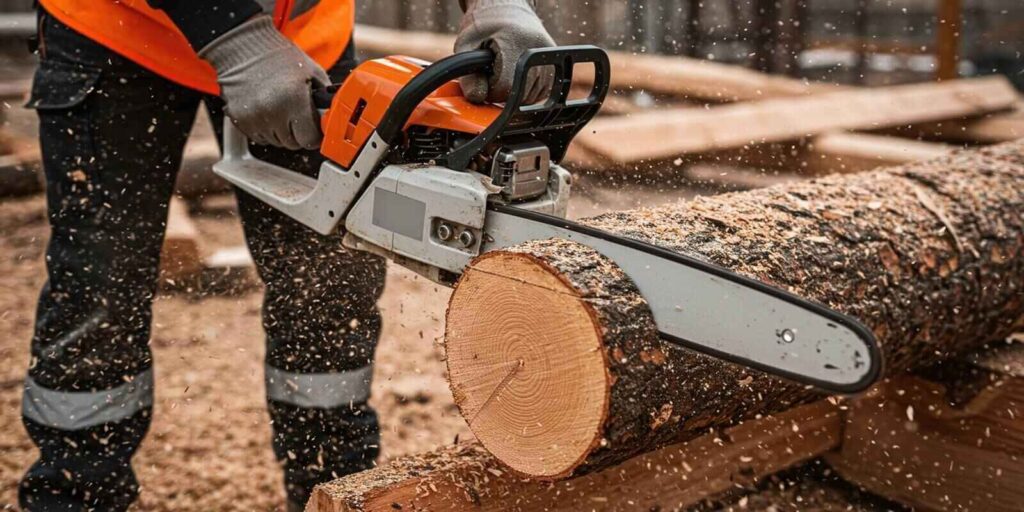
A lessee’s insurable interest runs to what they brought onto the property and what they stand to lose if operations are disrupted. That typically includes equipment staged on or moved across the leased timberland, harvested timber held at landings before transport, income from ongoing harvest operations, and liability exposure from the operations themselves.
The liability piece is where lessees are most frequently underinsured. A harvesting contractor working leased timberland needs general liability coverage for their own operations, but the landowner’s timberland liability policy does not cover those operations.
Timber sale agreements routinely address this directly. The harvesting party carries liability for their work on the property, and the landowner is named on the harvester’s policy as an additional insured so that claims arising from harvesting activity don’t land on a policy the landowner controls.
The reforestation obligation is another area where coverage responsibilities in a lease can become expensive if left unaddressed. Under Code of Virginia § 10.1-1173, the State Forester can step in to help with reforestation after a harvest, but that help runs to the landowner, not to whoever ran the harvesting equipment.
When a lease leaves the reforestation question unaddressed, it becomes unclear who’s on the hook for it. That ambiguity tends to surface after the harvesting contractor has left the site, at which point resolving it gets expensive for whoever gets stuck holding it.
How Lease Language Drives Coverage Requirements
A timberland lease that specifies insurance requirements changes the analysis for both parties. Landowners who require lessees to carry general liability coverage and name them as an additional insured are protected from claims arising out of the lessee’s operations. Lessees who accept those requirements need to verify that their existing policies actually satisfy them, since the coverage type, limit, and named-insured endorsement required by the lease may not match what is currently in place.
The mismatches tend to be specific. A lease may call for $2 million in liability coverage while the lessee’s existing policy sits at $1 million. Harvesting operations are sometimes carved out of a contractor’s general liability form entirely, making the required coverage effectively absent even when a certificate exists.
Named-insured endorsements get overlooked until a claim hits, at which point the landowner discovers they weren’t actually on the policy. Equipment that moves to a leased site may also fall outside inland marine coverage that was written for a fixed location.
Timberland near streams, wetland buffers, or drainage features often comes with lease language requiring pollution liability coverage. A general liability policy won’t satisfy that language. The pollution exclusion in a standard commercial general liability removes exactly the coverage the lease provision is asking for. Satisfying it requires either a pollution endorsement added to an existing policy or a separate contractor pollution liability form.
Cover Your Timberland Position with Burton & Company
Burton & Company has worked with Virginia timberland owners and logging and forestry operators for over 100 years. The coverage you need looks different depending on your position, and getting it right means starting with what the lease actually says and what your operations actually involve.
We will take the time to go through your situation, explain what each coverage type does and does not include, and put together protection that matches how you actually hold and work your timberland. You will not walk away with a policy you do not need.
Reach out to Burton & Company online or call (888) 652-1046 to start the conversation.