
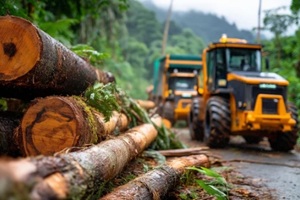
In the forestry industry, timber trespass suits are among the most financially damaging legal disputes, and they can occur even when a logging contractor or landowner believed they were operating within their rights.
A crew that misreads a property line, a timber sale that crosses an unmarked boundary, or a dispute over a poorly documented harvest agreement can escalate into costly litigation. The legal fees alone can threaten the financial stability of a logging operation.
Logging insurance is the financial foundation that allows contractors and landowners to respond to timber trespass claims without bearing those costs themselves.
| In this guide: How these suits arise, what logging insurance covers when a claim is filed, how legal defense provisions work, and where coverage gaps can leave a business exposed. |
How Timber Trespass Suits Arise
Timber trespass does not require malicious intent. The Virginia Department of Forestry acknowledges that trespass is most often an accidental occurrence, frequently involving disputed or poorly marked boundary lines. A logger can follow best management practices and carry all required documentation, but still cross a property line that was never accurately surveyed or clearly posted.
Under Virginia Code, any person who removes timber from another’s land without legal right or permission is liable for three times the value of the timber on the stump, plus reforestation costs, the costs of ascertaining timber value, and reasonable attorney fees incurred by the landowner. The law explicitly shifts attorney-fee liability onto the defendant, meaning that even a good-faith trespass can result in a bill well beyond the value of the trees themselves.
For logging contractors, these stakes are compounded. A contractor named in a timber trespass suit may contend with civil liability while managing ongoing operations and business relationships. Landowners who inadvertently authorize a harvest that extends into a neighbor’s parcel are similarly exposed.
What Logging Insurance Covers in a Trespass Claim
A well-structured logging insurance policy, typically built around a general liability or logging contractor liability form, responds to third-party claims of property damage. Timber trespass, when it results in the unauthorized taking of timber, qualifies as property damage under most commercial general liability policies.
When a trespass claim is filed against an insured logging contractor, the policy’s liability coverage generally covers the cost of defending the claim, including attorney fees and court costs. If the insured is found liable, it covers damages up to policy limits. This defense obligation is one of the most valuable aspects of logging contractor liability insurance, given how quickly legal costs can accumulate.
For forest landowners who authorize timber sales, exposure can be equally serious. If a harvesting crew crosses a boundary, the landowner may share liability depending on how the contract was structured. A forestry liability policy with hired and non-owned contractor provisions can provide coverage in these scenarios.
The Role of Legal Defense Provisions
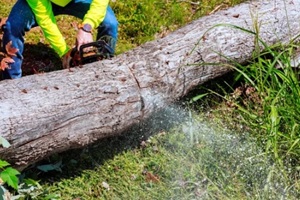
In a standard commercial general liability policy, the insurer has both the right and the duty to defend the insured against any covered claim, even a groundless one. The insurer assigns defense counsel and pays defense costs directly, without reducing the limits available for any final judgment or settlement.
Some logging insurance policies use a “defense within limits” structure, where defense costs are paid from the same pool as liability coverage. This can greatly diminish the funds available for damages if the litigation continues for an extended period. Contractors and landowners should review policy language carefully with a knowledgeable insurance professional to confirm how defense costs are handled.
Given the statutory timelines under Virginia law, prompt notification to your logging insurance carrier after any suspected trespass or claim is essential.
Coverage Gaps That Can Leave You Exposed
Not every logging insurance policy responds to every timber trespass scenario. There are several common gaps before a claim arises.
- Intentional acts exclusions: If a trespass is deemed willful, most liability policies will not respond. Contractors who knowingly cut beyond a sale boundary may find coverage denied entirely.
- Inadequate policy limits: Virginia’s treble damages provision means liability can quickly reach three times the market value of the timber removed, plus legal costs. Limits that seemed sufficient before a claim may fall short.
- Contractual liability gaps: If a logging contract does not clearly address who bears responsibility for boundary verification, both parties may experience exposure that their individual policies handle differently.
- Gaps between contractor and landowner coverage: In suits where both parties are named, uncoordinated logging insurance programs can leave overlapping areas of liability unresolved.
Reviewing coverage with an experienced forestry insurance professional before a harvest begins is far less costly than discovering those gaps after litigation has started.
Protect Your Operation Before a Dispute Occurs
The Virginia Department of Forestry recommends that landowners clearly mark property boundaries and communicate with neighboring landowners to reduce the risk of trespass.
Even careful operations experience disputes. When they do, having the right logging insurance in place is what separates a manageable claim from a financially devastating one.
Talk to Burton & Company About Your Logging Insurance Coverage
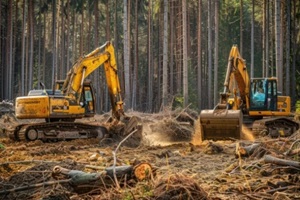
At Burton & Company, we have been helping Virginia businesses protect what they have built for over 130 years. Our team understands the risks that logging contractors and forest landowners face, including the liability and legal defense exposure associated with timber trespass suits.
We will work with you to review your current program, identify any gaps, and make sure your logging insurance is structured to respond when you need it most.
Reach out to us today by calling (888) 652-1046 or contact us online to speak with an agent who knows forestry insurance.