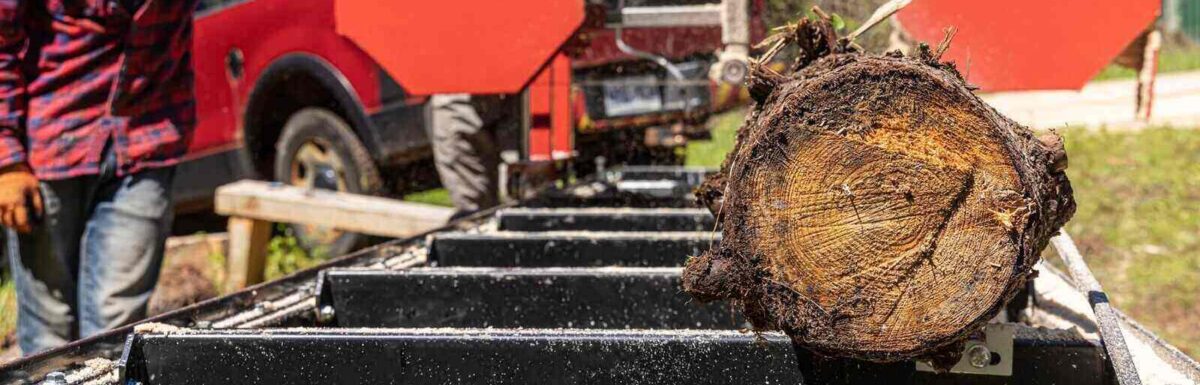
If you run a portable sawmill or operate a chipper as part of a site-clearing crew, your equipment is rarely sitting still. It moves from job site to job site, gets loaded and unloaded in rough terrain, and earns its keep far from any permanent address.
Here’s the problem many mobile mill operators discover the hard way: Standard commercial property insurance is built around a fixed location. Once your equipment leaves your address and heads down a logging road, coverage may stop.
This is where forestry insurance, specifically an inland marine equipment floater, becomes essential. This guide covers what that coverage is, why it fills a gap that traditional property policies leave open, and how to make sure your machinery is protected at every job site.
What Standard Property Insurance Gets Wrong for Mobile Operators
A typical commercial property policy protects assets at a defined, permanent location. For a contractor whose sawmill spends most of its life on private timberland or a government land contract miles away, that’s a serious coverage gap.
The Insurance Information Institute notes that businesses increasingly rely on mobile equipment that needs protection while in transit or stored offsite. Standard property insurance often excludes these exposures; unfortunately, portable sawmills and chippers fall squarely in that gap.
If a mill is damaged by fire, theft, or a falling tree while on-site, a standard property policy may pay nothing, simply because the equipment wasn’t at the insured premises when the loss happened.
What Is an Equipment Floater Under Inland Marine Insurance?
Inland marine insurance has a name that sounds more nautical than practical, but it plays a direct role in forestry contractor insurance. A floater policy covers movable property continuously, regardless of where that equipment is when a loss occurs.
For mobile mill operators, this means a portable sawmill, wood chipper, or related processing equipment is covered at any job site, whether that’s a private woodlot, a county road clearing project, or a federal timber sale. The coverage follows the machine.
Inland marine coverage forms are generally broader than standard property forms, both in covered causes of loss and covered locations, which is exactly what logging contractor risk management calls for.
Why Portable Sawmills and Chippers Need This Coverage
The dollar value at stake is significant. Portable sawmills represent a real startup investment for small operators, and commercial chippers from manufacturers like Bandit, Morbark, and Vermeer can run well into six figures. Losing that machinery to fire, theft, or a major mechanical event without proper forestry equipment coverage can put an operation out of business.
Beyond the equipment value, the work environment creates real hazards. Logging consistently ranks among the most hazardous industries in the United States, and operators face risks associated with chipping, debarking, and storing logs at remote sites far from immediate help.
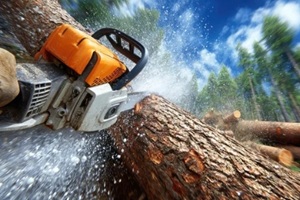
Common losses that a forestry insurance equipment floater can address include:
- Fire or explosion at the work site
- Theft during transit or overnight storage in the field
- Physical damage from falling trees, logs, or debris
- Collision during transport
- Vandalism at remote, unsupervised locations
How Inland Marine Differs From Your Commercial Auto Policy
Your truck or trailer may be covered by a commercial auto policy on the road, but the sawmill itself, once it’s off the trailer and running at the job site, typically falls outside auto coverage. An equipment floater picks up where the auto policy leaves off, covering the machine through every phase of the job.
What to Look for in Forestry Insurance Coverage
A few questions are worth raising with your agent when reviewing logging insurance coverage for portable equipment:
Does the policy cover full replacement value? Agreed value coverage means you and the insurer settle the machine’s worth upfront, so a total loss doesn’t trigger a depreciation dispute.
Does it cover equipment at any job site? Confirm that no geographic limits create gaps on government land contracts or remote private land forestry contracts.
What causes of loss are included? A broad open perils form offers more protection than a named perils policy. Ask specifically about theft and fire, the most common losses in remote logging work.
Working with a forestry liability insurance professional who understands mobile logging, not just general business coverage, is the most reliable way to avoid gaps when it counts.
Get the Right Coverage for Your Operation with Burton & Company
At Burton & Company, we’ve been helping Virginia businesses protect what they’ve built since 1891. We work with mobile mill operators and site-clearing contractors who need insurance for logging companies that reflects how they actually work: in the field, with high-value equipment that can’t sit idle after a loss.
If your current policy leaves your sawmill or chipper unprotected once it leaves your home base, it’s worth a conversation about adding an equipment floater to your forestry insurance program. We won’t suggest anything unnecessary. We’ll provide coverage that suits your needs.
Contact Burton & Company online or call (888) 652-1046 to discuss your logging contractor risk management needs and get protected before the next job starts.