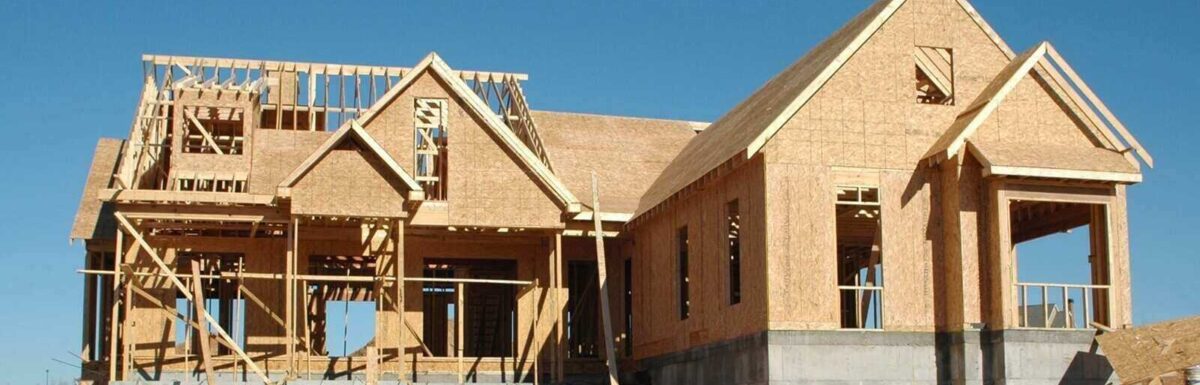

If you build homes for a living, you already know that every project carries financial risk from breaking ground to the final walkthrough. What you may not know is that two separate types of insurance protect you at two very different stages, and confusing them can leave you seriously exposed.
Builder’s risk insurance and home builders insurance are both essential for contractors, but they serve distinct purposes. This guide breaks down what each policy covers, where each stops, and how to structure both so nothing slips through the cracks.
What Is Builder’s Risk Insurance?
Builder’s risk insurance is a type of property insurance specifically created to safeguard a building that is currently being constructed. It provides coverage for the building and on-site materials as a result of physical damage from events such as fire, wind, vandalism, and theft while the project is in progress.
As the Insurance Information Institute explains, a building has ever-increasing value as more of it is completed. If a fire destroys a home when it is halfway built, a builder’s risk policy covers approximately half of the completed value, proportional to the amount of work completed.
What Builder’s Risk Typically Covers
- The structure itself (framing, roofing, and installed components)
- Building materials stored on-site or in transit
- Temporary structures such as scaffolding
- Losses from fire, lightning, wind, hail, vandalism, and theft
What Builder’s Risk Does Not Cover
Builder’s risk is a temporary policy. It expires when the project is complete and the structure is occupied. It generally does not cover contractor tools and equipment, third-party bodily injury claims, flooding, or employee theft.
What Is Home Builders Insurance?
Home builders insurance refers to the broader liability and business coverage that protects a home building company as an ongoing operation. It goes beyond any single project to cover the financial and legal risks of operating a construction business day to day.
The primary element is commercial general liability (CGL) insurance. A commercial general liability policy provides coverage for legal defense expenses and damages if you’re deemed liable for bodily injuries or property damage resulting from your operations, up to the limits of your policy. Liability lawsuits frequently occur in the construction industry and can significantly affect a company’s finances.
Home builders insurance is often structured as a business owners policy, which bundles general liability, commercial property, and business interruption coverage into a single package, usually the most cost-effective approach for smaller construction firms.
What Home Builders Insurance Typically Covers
- Third-party bodily injury (a visitor injured on your job site)
- Property damage caused by your work
- Completed operations liability (claims after a project is finished)
- Business property, including office equipment and tools
- Business interruption losses
What Home Builders Insurance Does Not Cover

Standard CGL policies exclude workers’ injuries, which are covered by workers’ compensation insurance. Workers’ compensation is not mandated at the federal level; instead, each state establishes its own regulations.
Home builders insurance also does not cover professional errors or design failures (those require errors and omissions coverage) or damage to the structure under construction.
The U.S. Small Business Administration advises insuring against risks you could not realistically absorb on your own. For home builders, a single liability suit can easily reach six figures.
A Side-by-Side Comparison
| Builder’s Risk | Home Builders Insurance | |
| Protects | The structure under construction | Your business operations and liability |
| Duration | Project-specific (temporary) | Ongoing, renews annually |
| Primary coverage | Physical damage to the building | Third-party claims and business losses |
| When it ends | At project completion | Continuously, as long as renewed |
Why You Need Both and When
These two policies cover completely different aspects of the build.
- Builder’s risk protects the property.
- Home builders insurance protects your business.
Without builder’s risk, a fire mid-project could leave you absorbing the full reconstruction cost. Without home builders insurance, a single injury claim could threaten your entire operation.
The National Association of Home Builders notes that contractors must clearly understand the risks they are responsible for and the methods available to manage them, including subcontractor coverage and additional insured endorsements.
A practical approach for most residential projects:
- Before breaking ground: Secure builder’s risk insurance for the project, sized to the expected completed value.
- Throughout the project: Maintain your home builders insurance to cover liability and ongoing business operations.
- At project completion: Allow builder’s risk to expire and confirm your completed operations liability is active for post-project claims.
Many builders assume general liability covers structural damage mid-construction, but it typically does not. Working with an experienced insurance professional is the most reliable way to make sure your coverage matches your actual exposure.
Let Burton & Company Put the Right Coverage in Place

For home builders and contractors in Virginia, the stakes are too high to leave your coverage to chance.
Burton & Company has been helping builders structure the right protection since 1891. We learn your business, assess your true exposure, and connect you with top-rated insurers specializing in construction risks. You will not be offered anything you don’t need.
Are you ready to review your builder’s risk and home builders insurance coverage? Contact the team at Burton & Company online or call (888) 652-1046.