

Building homes demands attention to countless details at every stage. From the moment you break ground until you hand over the keys, your business contends with a variety of issues that could result in significant financial losses. Home builders insurance provides the protection you need throughout the entire construction process.
Every construction project presents new challenges and potential hazards. A sudden storm could damage materials stored on-site. An injury to one of your workers could lead to costly medical bills and possible lawsuits. Lack of proper coverage can put your business’s finances at risk.
This guide walks you through the essential insurance coverages that protect your home building business at every phase of construction.
Step 1: Secure Builders Risk Insurance
Builders risk insurance serves as your first line of defense once construction begins. This specialized coverage protects buildings under construction, materials on-site, and equipment from fire, theft, vandalism, wind, and other covered perils. The policy provides coveragefor direct physical loss or damage to construction projects.
Timing is essential for this coverage, because the policy usually starts when you assume legal responsibility for the property. Secure your policy before construction starts to avoid any gaps in protection.
The coverage terminates when construction completes, ownership transfers, the property is occupied for more than 60 days, or when permanent property insurance takes effect. Understanding these end dates helps you transition smoothly to standard coverage.
Step 2: Set Up General Liability Coverage
General liability insurance safeguards your business against claims involving property damage and bodily injury that may occur on construction sites. This coverage handles financial loss from physical injury, property damage, medical expenses, lawsuits, and settlement bonds or judgments.
If a client visits your site and trips over building materials, general liability covers their medical expenses and protects you from lawsuit costs. Many contracts necessitate evidence of this coverage before commencement of work, making it crucial for obtaining projects.
Step 3: Obtain Workers’ Compensation Insurance
Workers’ compensation stands as a legal requirement for every business with employees. According to OHSA, construction is a high-hazard industry where workers engage in many activities that may expose them to serious hazards, such as falling from rooftops, unguarded machinery, being struck by heavy construction equipment, and electrocutions.
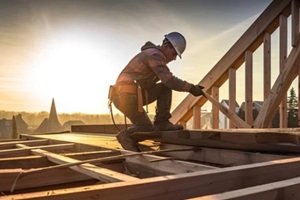
This coverage provides for medical expenses and compensates for lost wages if employees incur injuries related to their work. State requirements vary significantly, so verify your state’s specific requirements to maintain compliance.
Step 4: Add Commercial Auto Insurance
Home building operations require vehicles transporting workers, materials, and equipment between job sites. Commercial auto insurance protects business vehicles and covers liability if there is an accident.
Personal auto policies exclude business use, so commercial insurance is required. This protection includes collision, liability, comprehensive coverage for theft and vandalism, and uninsured motorist coverage.
Step 5: Protect Your Tools and Equipment
Construction equipment represents a substantial investment. Inland marine insurance provides coverage for tools and equipment that move between job sites, protecting against theft, damage, and loss whether on-site, in transit, or stored at your facility.
Construction sites often remain unsecured overnight and equipment theft is common, making this protection invaluable.
Step 6: Look into Professional Liability Coverage
This type of insurance protects against the risks linked to the services you offer. If a design flaw causes problems after completion or you miss a contractual deadline, this coverage helps protect your business from resulting financial claims.
For home builders who handle design work or provide specialized consulting services, this coverage fills gaps that standard liability policies don’t address.
Step 7: Assess and Adjust Your Coverage Annually
As a general rule, insure against that which you wouldn’t be able to pay for on your own. Consider the value of your typical projects, equipment replacement costs, number of employees, and contract requirements.
Re-assess your coverage every year as your business grows. When you acquire new equipment or broaden your operations, meet with your insurance agent to find out how these changes might impact your coverage.
Partner with Burton & Company for Complete Protection

Selecting the right insurance coverage for your home building business can be made easy. Burton & Company has been serving Virginia businesses since 1891, providing expert guidance and customized coverage solutions.
Our team understands the risks that challenge home builders. We partner with highly rated insurance providers to deliver coverage tailored to your requirements and financial situation. Rather than pushing unnecessary coverage, we focus on identifying the protection that truly matters for your operation.
Call Burton & Company at (888) 652-1325 or contact us online to get started with a free consultation and quote to develop a comprehensive plan tailored to your business’ needs. Our experienced agents will help you build a protection plan that covers you from start to finish, giving you the assurance to focus on building quality homes.